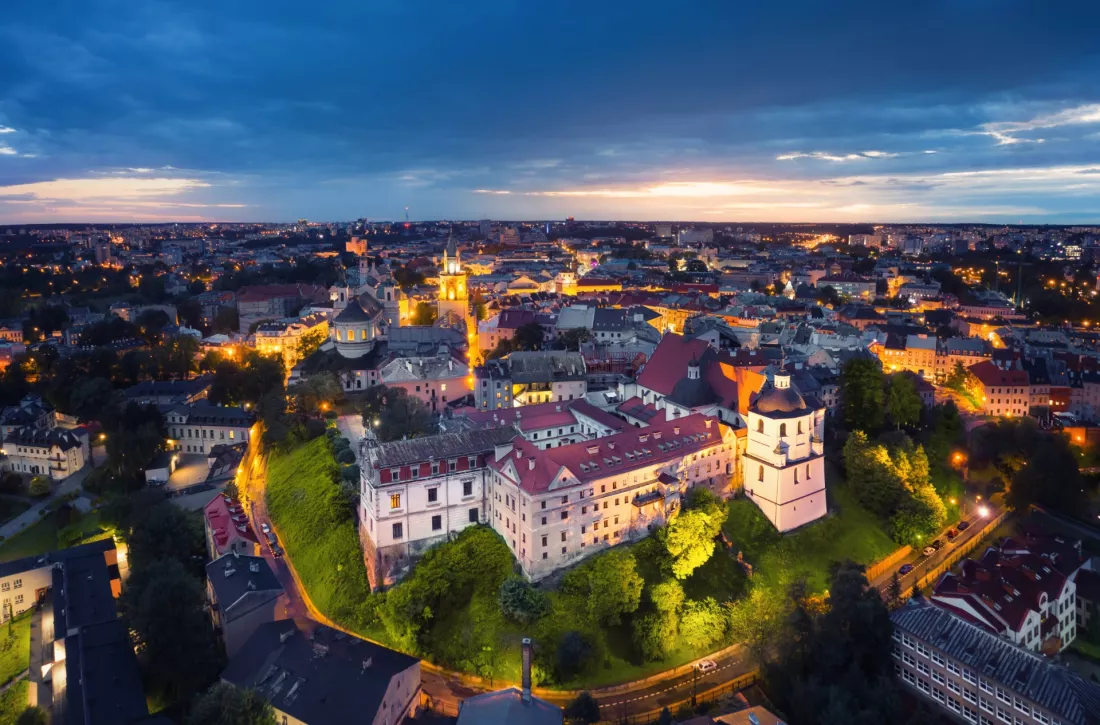
Lublin, Polska

Intercultural Communication in Education and The Workplace

II stopnia
Spis treści
farzad-mohsenvand-pKhfJme9mP0-unsplash

⇑Intercultural Communication in Education and The Workplace na UMCS

Język wykładowy: angielskiStudia w języku angielskim
Grupa kierunków: pedagogiczne
System studiów: sta­cjo­nar­ne

⇑Why study Intercultural Communication in Education and the Workplace (Master's) at UMCS?

dlaczego-warto-studiowac-na-UMCS
Why study it:

Intercultural Communication in Education and the Workplace at Maria Curie-Skłodowska University in Lublin (UMCS) is a two-year, full-time Master's programme with a general academic profile, taught in English at the Faculty of Philology. It is designed both for Polish students who want to study in English in an international environment and for foreign students looking for an English-taught MA in Poland.

Programme: four thematic blocks

The curriculum is built around four blocks: cultural studies, relations between language and culture, practical learning of a foreign language, and preparation for writing a Master's thesis. Along the way you study cultural anthropology, the dynamics of cultural phenomena, multilingualism and the adaptation difficulties people face in a multicultural environment.

The programme looks at intercultural communication in schools and at work. You study national and ethnic minorities, non-verbal communication in an intercultural context and multicultural problems in an era of global economic and educational migration, and you learn to research multicultural and multilingual settings.

Languages: English plus a second foreign language

Languages at a glance

  • Language of instructionEnglish
  • English on graduationlevel B2+ or C1
  • Second foreign languageminimum level A2
  • Focusreceptive and expressive communication skills related to the job market

After graduation: education and international workplaces

Graduates gain the knowledge needed to function on the international job market and qualifications to teach subjects related to multiculturalism in the contemporary world.

Practical oral and written language skills, intercultural competence – including its non-verbal side – and an attitude of respect and openness towards other cultures prepare you to work in educational institutions and on the international job market, and to carry out research in multilingual environments.

As of the 2026/27 admissions, based on the programme pages at irk.umcs.pl.

⇑Test: sprawdź czy Intercultural Communication in Education and The Workplace to studia dla Ciebie!

parabol-the-agile-meeting-tool-CS0D08N2n9M-unsplash

Odpowiedz na wszystkie pytania i sprawdź, czy Intercultural Communication in Education and The Workplace to studia dla Ciebie!

1. Czy interesuje Cię analiza komunikacji międzykulturowej w środowisku edukacyjnym?

2. Czy chcesz rozwijać umiejętności w zarządzaniu różnorodnością w miejscu pracy?

3. Czy interesuje Cię badanie różnic kulturowych w stylach komunikacji (werbalnej i niewerbalnej)?

4. Czy jesteś gotów/gotowa na projektowanie szkoleń międzykulturowych dla nauczycieli i pracowników?

5. Czy chcesz rozwijać umiejętności mediacji i rozwiązywania konfliktów międzykulturowych?

6. Czy interesuje Cię rola języka angielskiego i innych języków pomocniczych w komunikacji globalnej?

7. Czy jesteś gotów/gotowa na badania terenowe i obserwacje w różnych kulturach edukacyjnych?

8. Czy interesuje Cię analiza polityk edukacyjnych i praktyk HR w kontekście międzykulturowym?

9. Czy chcesz rozwijać kompetencje w prowadzeniu projektów współpracy międzynarodowej?

10. Co najbardziej motywuje Cię do podjęcia studiów magisterskich w Intercultural Communication in Education and The Workplace?

Kontakt:

pl. Marii Skłodowskiej-Curie 5
20-031 Lublin
Biuro Rekrutacji:
tel. +48 (81) 537 58 70,
+48 (81) 537 58 80


Wiadomości:

Polityka Prywatności